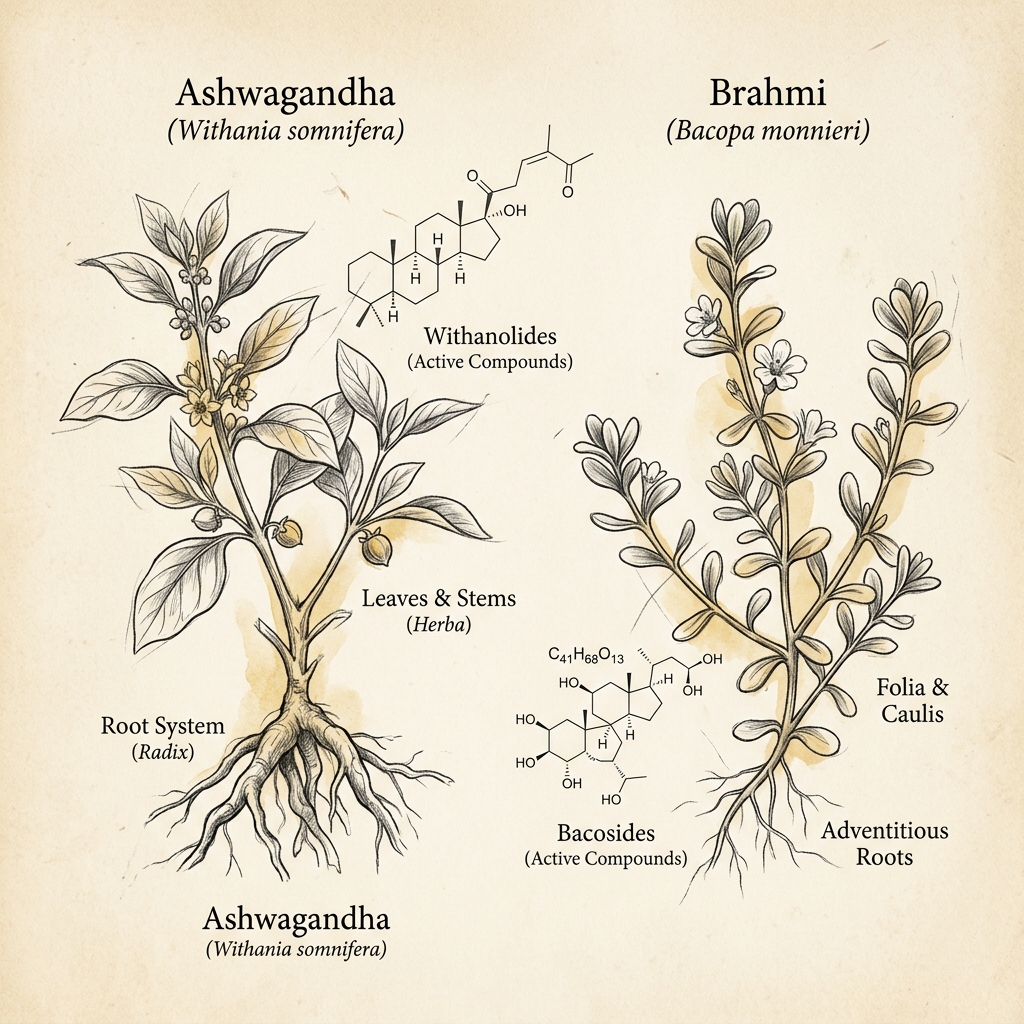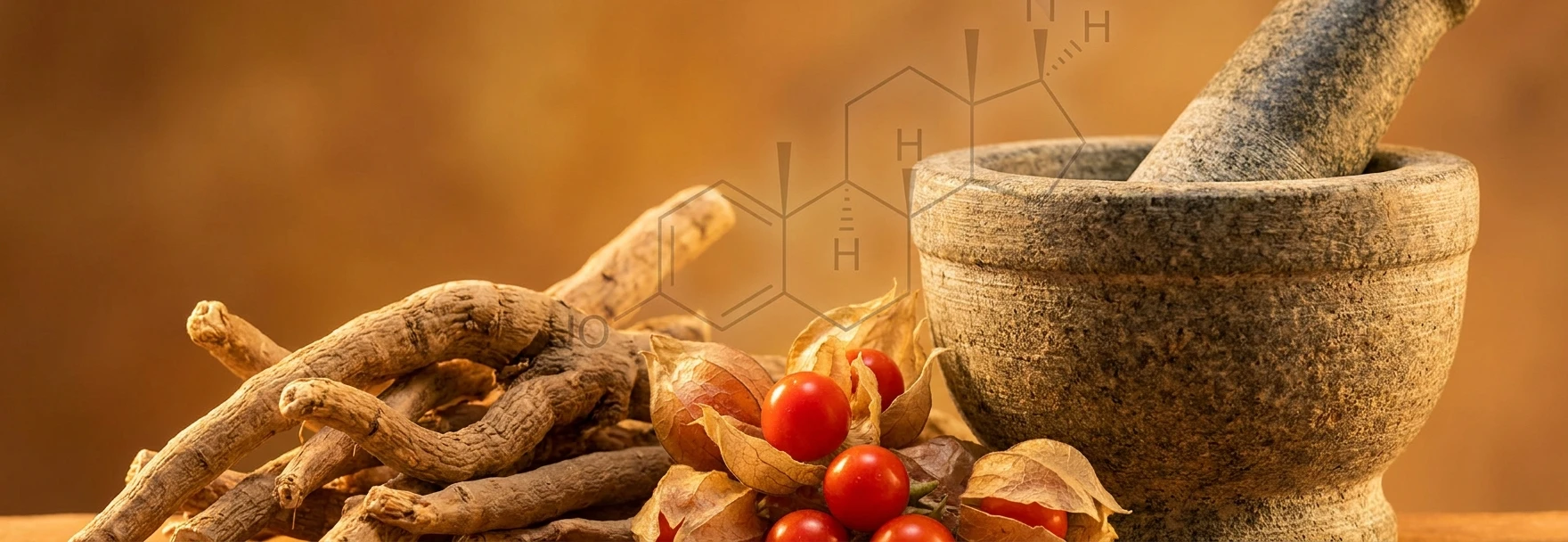
The world's most-studied adaptogen. Beyond the marketing claims, here is what peer-reviewed evidence actually demonstrates — and what it doesn't. Cortisol, anxiety, thyroid, sleep, testosterone.
Chandrasekhar et al (2012, IPGT) — 60-day double-blind RCT. KSM-66 ashwagandha reduced serum cortisol by 27.9% vs placebo. Consistent results across 8+ independent trials.
PSS (Perceived Stress Scale) scores reduced by 44% in 8-week trials. GAD-7 anxiety scores improved significantly vs placebo across 5 RCTs. Effect size: 0.79 (large).
PSQI (Pittsburgh Sleep Quality Index) improved in 5 trials. Ashwagandha's triethylene glycol compound appears to directly induce sleep via GABA-A receptor modulation.
Preliminary evidence: 8-week supplementation improved TSH and T4 in subclinical hypothyroid patients. Mechanism: cortisol reduction may improve TSH conversion. Needs larger trials.
17% testosterone increase in men with infertility-associated stress (Ambiye 2013). Cortisol-testosterone pregnenolone steal mechanism reversed by cortisol reduction.
3 RCTs show improved attention, processing speed, and memory under stress conditions. Likely cortisol-mediated — reduced cortisol → less hippocampal suppression → better memory.
May amplify thyroid medication effects. Monitor TSH if on levothyroxine.
Avoid during pregnancy. Traditional Ayurveda contraindicates; no RCT safety data.
Immune-modulating effects may interact with immunosuppressants. Consult your doctor.
This is educational information, not medical advice. Consult a qualified practitioner before supplementing.
Ashwagandha works best for HPA axis overactivation. The Stress Fingerprint tells you which of your 6 systems is most dysregulated — and whether cortisol-modulation is your highest-leverage starting point.
Find My Pattern — Free →