The connection
How stress drives Sleep Disorders
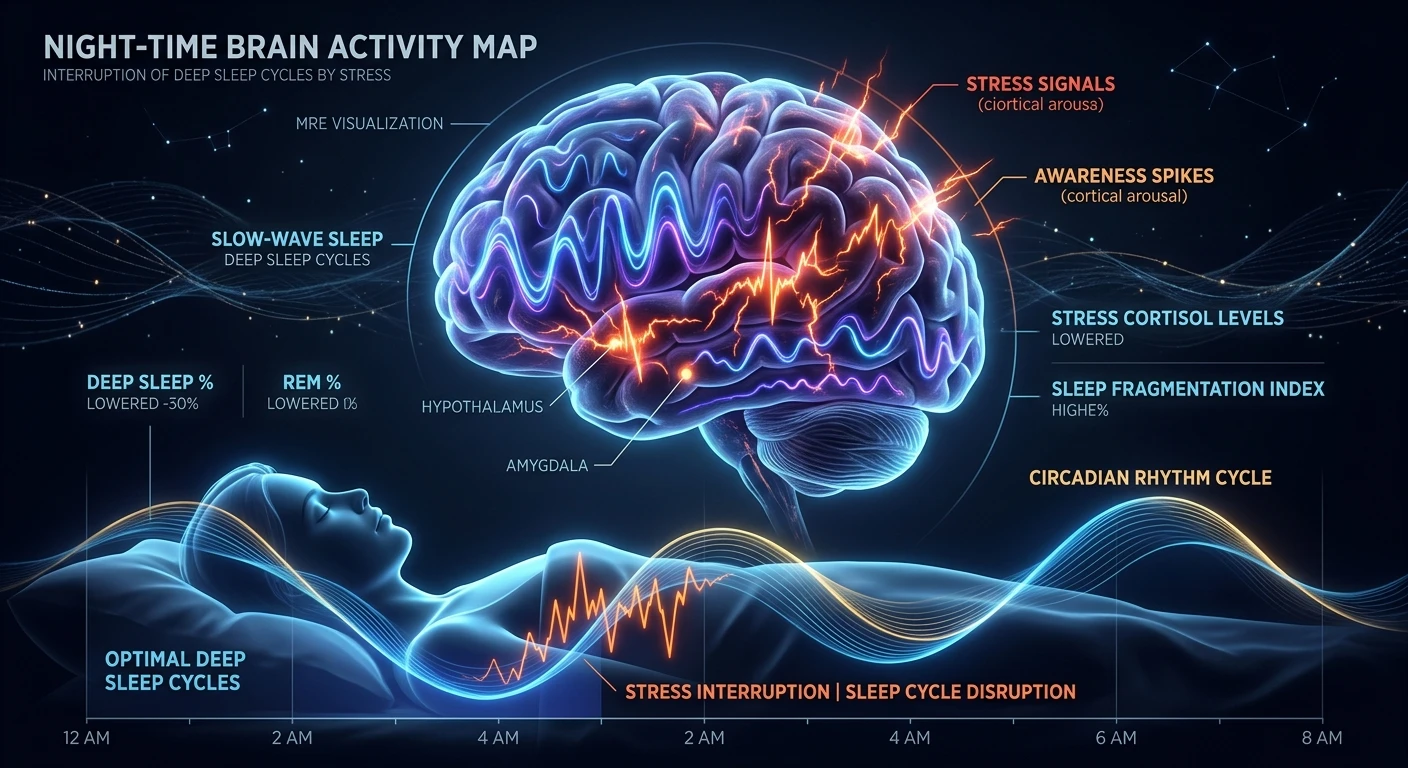
Stressed individuals are 3 times more likely to report clinically significant insomnia. Cortisol and melatonin are antagonists — when stress keeps cortisol elevated at night, melatonin cannot rise sufficiently to initiate deep sleep.
Source: Perlis et al., Sleep Medicine Reviews, 2020
Your body's stress map
Which systems are affected
Sleep Disorders stress typically affects these body systems. Your Stress Fingerprint™ tells you exactly which ones are elevated in you.
Why Stress Ruins Sleep Architecture
Sleep is not passive unconsciousness — it is an active biological process with four distinct stages. Elevated cortisol delays sleep onset, causes frequent micro-arousals that prevent deep sleep, shortens REM sleep critical for emotional processing, and turns the 3AM cortisol pulse into a full wakeup. One night of poor sleep raises cortisol by 20-30% the next day — worsening the following night. In India, 93% of adults report insufficient sleep (AIIMS, 2023).
Signs to Recognise
- Taking more than 20 minutes to fall asleep most nights
- Waking 2-4AM with an active, worrying mind
- Feeling unrefreshed after 7-8 hours
- Wired at bedtime but exhausted during the day
Is Sleep Disorders connected to your stress pattern?
The Stress Fingerprint™ maps exactly where stress lives in your body — across 6 systems including the ones linked to sleep disorders. Free, 7 minutes.
Take My Free Assessment →42 clinically-framed questions · No login · Results in 7 minutes
Explore more
Related conditions
Not medical advice. This page is for educational purposes only. The connection between stress and sleep disorders is supported by research, but this is not a clinical diagnosis. Please consult a registered healthcare professional for medical advice.