The connection
How stress drives Heart Disease
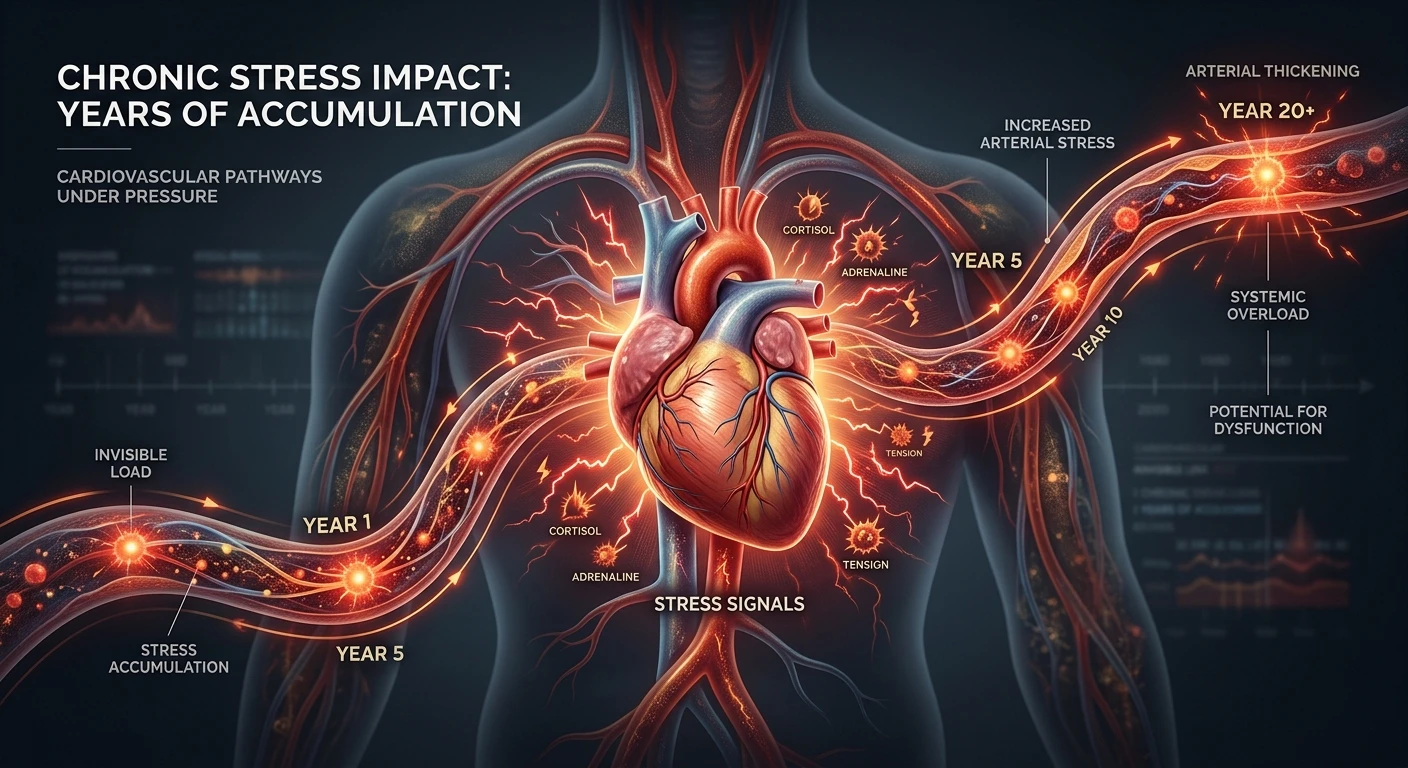
Chronically stressed individuals have roughly twice the risk of a cardiac event. Stress elevates cortisol, which raises blood pressure, increases LDL cholesterol, promotes arterial inflammation, and drives clotting mechanisms.
Source: Rosengren et al., INTERHEART Study, The Lancet, 2004
Your body's stress map
Which systems are affected
Heart Disease stress typically affects these body systems. Your Stress Fingerprint™ tells you exactly which ones are elevated in you.
The Cortisol-Heart Connection
Chronic stress floods the body with cortisol and adrenaline. When sustained, this damages the cardiovascular system: elevated blood pressure, increased LDL cholesterol, arterial inflammation, and higher platelet aggregation. Indians develop cardiovascular disease a decade earlier on average. Stress compounds this significantly.
Warning Signs
- Palpitations during stressful periods
- Chest tightness that resolves when stress lifts
- Elevated resting blood pressure
- Fatigue disproportionate to physical activity
Is Heart Disease connected to your stress pattern?
The Stress Fingerprint™ maps exactly where stress lives in your body — across 6 systems including the ones linked to heart disease. Free, 7 minutes.
Take My Free Assessment →42 clinically-framed questions · No login · Results in 7 minutes
Explore more
Related conditions
Not medical advice. This page is for educational purposes only. The connection between stress and heart disease is supported by research, but this is not a clinical diagnosis. Please consult a registered healthcare professional for medical advice.