🌸

Stress & PCOS

How Chronic Stress Fuels
PCOS

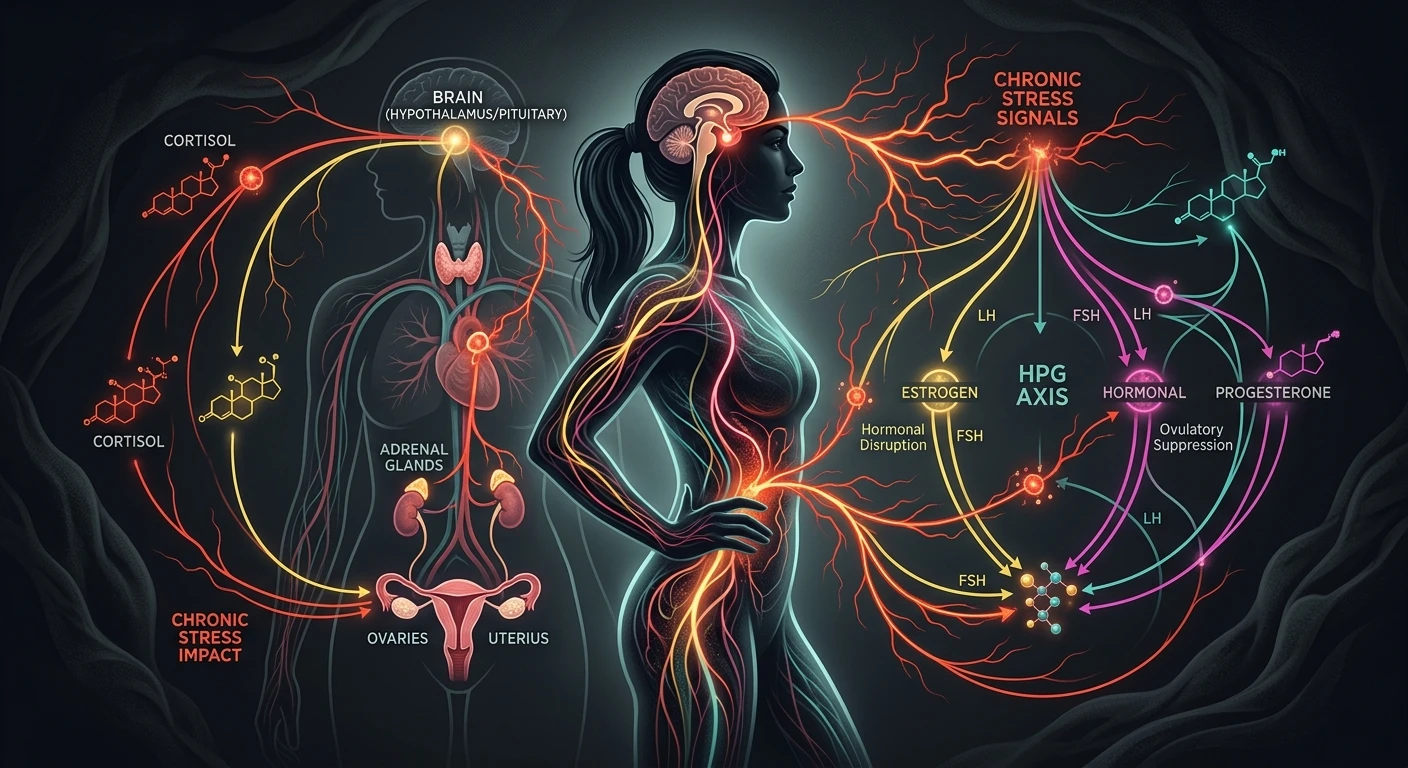
Polycystic Ovary Syndrome and chronic stress share a hormonal root. Cortisol disrupts the hormones that regulate ovulation.

How stress drives PCOS

1 in 5

One in five Indian women of reproductive age has PCOS. Chronic stress is both a trigger and amplifier: cortisol dysregulates LH, FSH, and androgens — the exact hormonal imbalances that define PCOS.

Source: Teede et al., Human Reproduction, 2022 International PCOS Guidelines

Which systems are affected

PCOS stress typically affects these body systems. Your Stress Fingerprint™ tells you exactly which ones are elevated in you.

⚡ Hormonal 😴 Sleep 🛡️ Immune

The Stress-PCOS Hormonal Loop

PCOS is fundamentally a hormonal disorder — and cortisol is a master hormone disruptor. When chronic stress keeps the HPA axis activated, it suppresses gonadotropin signals, directly interfering with ovulation. One in five Indian women of reproductive age has PCOS — the highest prevalence globally. Cortisol also stimulates adrenal androgen production and drives insulin resistance, which amplifies ovarian androgen output.

Signs Stress Is Driving Your PCOS

  • Cycles becoming more irregular during high-stress periods
  • Skin flares correlating with stress peaks
  • Hair thinning that worsens under pressure
  • Abdominal weight gain despite unchanged diet

Is PCOS connected to your stress pattern?

The Stress Fingerprint™ maps exactly where stress lives in your body — across 6 systems including the ones linked to pcos. Free, 7 minutes.

Take My Free Assessment →

42 clinically-framed questions · No login · Results in 7 minutes

Related conditions

Not medical advice. This page is for educational purposes only. The connection between stress and pcos is supported by research, but this is not a clinical diagnosis. Please consult a registered healthcare professional for medical advice.