🦋

Stress & Thyroid Disorders

How Chronic Stress Fuels
Thyroid Disorders

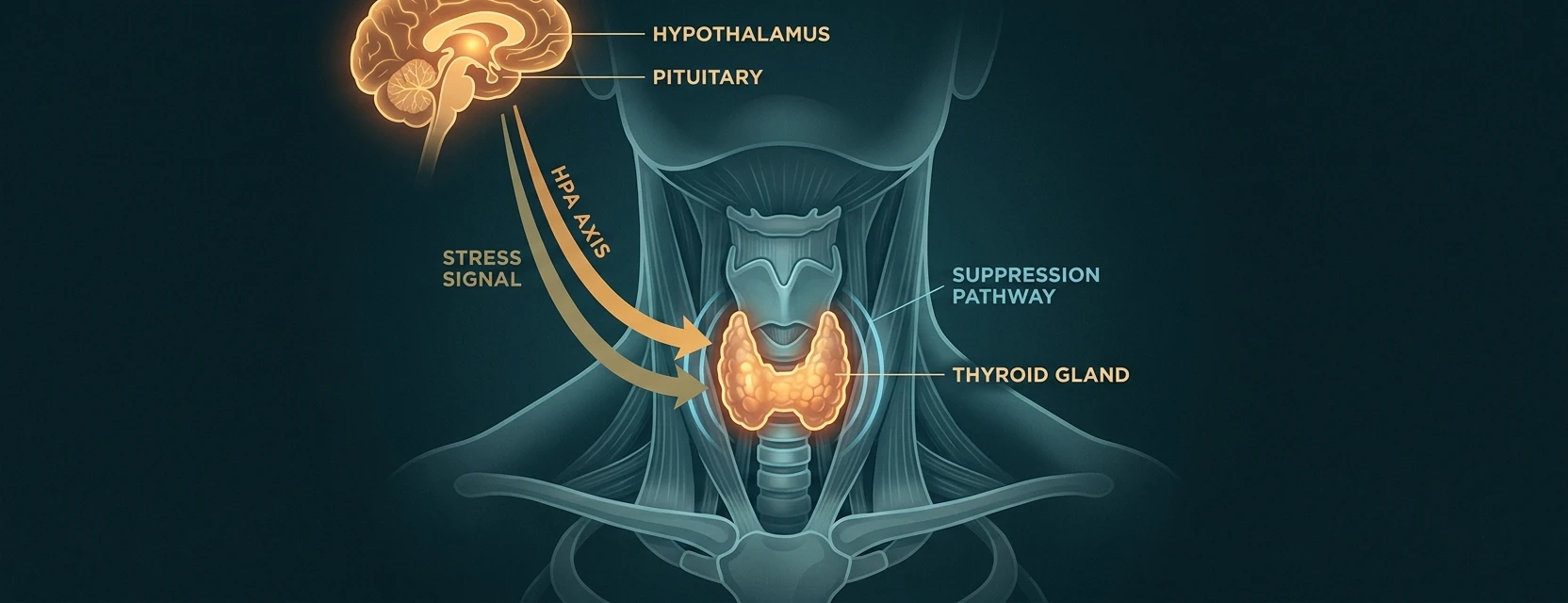
Chronic stress suppresses thyroid hormone production and conversion, contributing to hypothyroid symptoms even when TSH appears normal.

How stress drives Thyroid Disorders

42 Million

India has an estimated 42 million people with thyroid disorders. Cortisol suppresses TSH secretion, reduces T4-to-T3 conversion, and creates reverse T3 — leaving cells functionally hypothyroid even when lab ranges appear normal.

Source: Unnikrishnan et al., Indian Journal of Endocrinology and Metabolism, 2013

Which systems are affected

Thyroid Disorders stress typically affects these body systems. Your Stress Fingerprint™ tells you exactly which ones are elevated in you.

⚡ Hormonal 🛡️ Immune 😴 Sleep

How Stress Disrupts Thyroid Function

The thyroid gland is exquisitely sensitive to cortisol. Stress suppresses TSH secretion from the pituitary, reduces conversion of T4 to active T3, increases reverse T3 production, and drives autoimmune thyroiditis (Hashimoto). India has an estimated 42 million people with thyroid disorders. Many patients experience classic hypothyroid symptoms while being told their TSH is normal — stress-mediated T4-to-T3 conversion failure is the missing link.

Stress-Thyroid Symptoms

  • Persistent fatigue that does not respond to rest
  • Unexplained weight gain or difficulty losing weight
  • Hair thinning especially at the temples and crown
  • Cold hands and feet, feeling cold when others are comfortable
  • Brain fog and slow cognitive processing

Is Thyroid Disorders connected to your stress pattern?

The Stress Fingerprint™ maps exactly where stress lives in your body — across 6 systems including the ones linked to thyroid disorders. Free, 7 minutes.

Take My Free Assessment →

42 clinically-framed questions · No login · Results in 7 minutes

Related conditions

Not medical advice. This page is for educational purposes only. The connection between stress and thyroid disorders is supported by research, but this is not a clinical diagnosis. Please consult a registered healthcare professional for medical advice.