The connection
How stress drives Mental Health and Depression
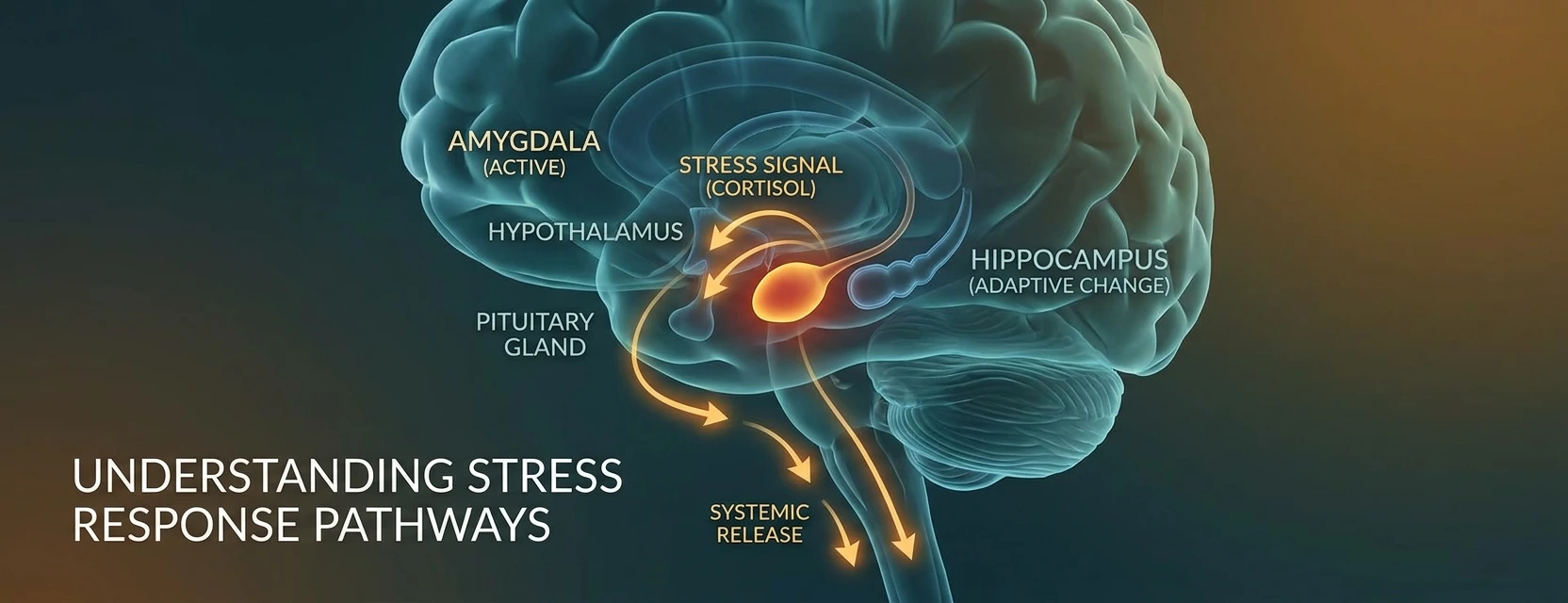
Chronic psychosocial stress contributes to approximately 40% of depression and anxiety cases worldwide. Sustained cortisol reduces hippocampal neurogenesis, shrinks the prefrontal cortex, and enlarges the amygdala — making anxiety self-sustaining.
Source: McEwen, Annual Review of Psychology, 2017
Your body's stress map
Which systems are affected
Mental Health and Depression stress typically affects these body systems. Your Stress Fingerprint™ tells you exactly which ones are elevated in you.
How Chronic Stress Changes the Brain
Sustained cortisol suppresses BDNF reducing hippocampal neurogenesis, shrinks the hippocampus involved in memory and context, hyperactivates and enlarges the amygdala, and progressively weakens prefrontal cortex regulation — the rational brake on emotional reactivity. Depression is increasingly understood as an inflammatory condition: chronic stress drives systemic inflammation that crosses the blood-brain barrier and reduces serotonin synthesis, explaining why stress reduction often improves depression when SSRIs alone are insufficient.
When to Seek Support
- Persistent low mood lasting more than two weeks
- Inability to feel pleasure in activities previously enjoyed
- Constant worry or catastrophising
- Significant changes in sleep, appetite, or energy level
- Difficulty concentrating or making decisions
If you are experiencing thoughts of self-harm, please contact iCall: 9152987821 or Vandrevala Foundation: 1860-2662-345 (24/7).
Is Mental Health and Depression connected to your stress pattern?
The Stress Fingerprint™ maps exactly where stress lives in your body — across 6 systems including the ones linked to mental health and depression. Free, 7 minutes.
Take My Free Assessment →42 clinically-framed questions · No login · Results in 7 minutes
Explore more
Related conditions
Not medical advice. This page is for educational purposes only. The connection between stress and mental health and depression is supported by research, but this is not a clinical diagnosis. Please consult a registered healthcare professional for medical advice.